For weeks the raccoons ran the island from the comfort of home. Now they have packed a flask, lit a torch and gone out into the world. Straight to the neighbours, unfortunately.
The mountain and its tenants
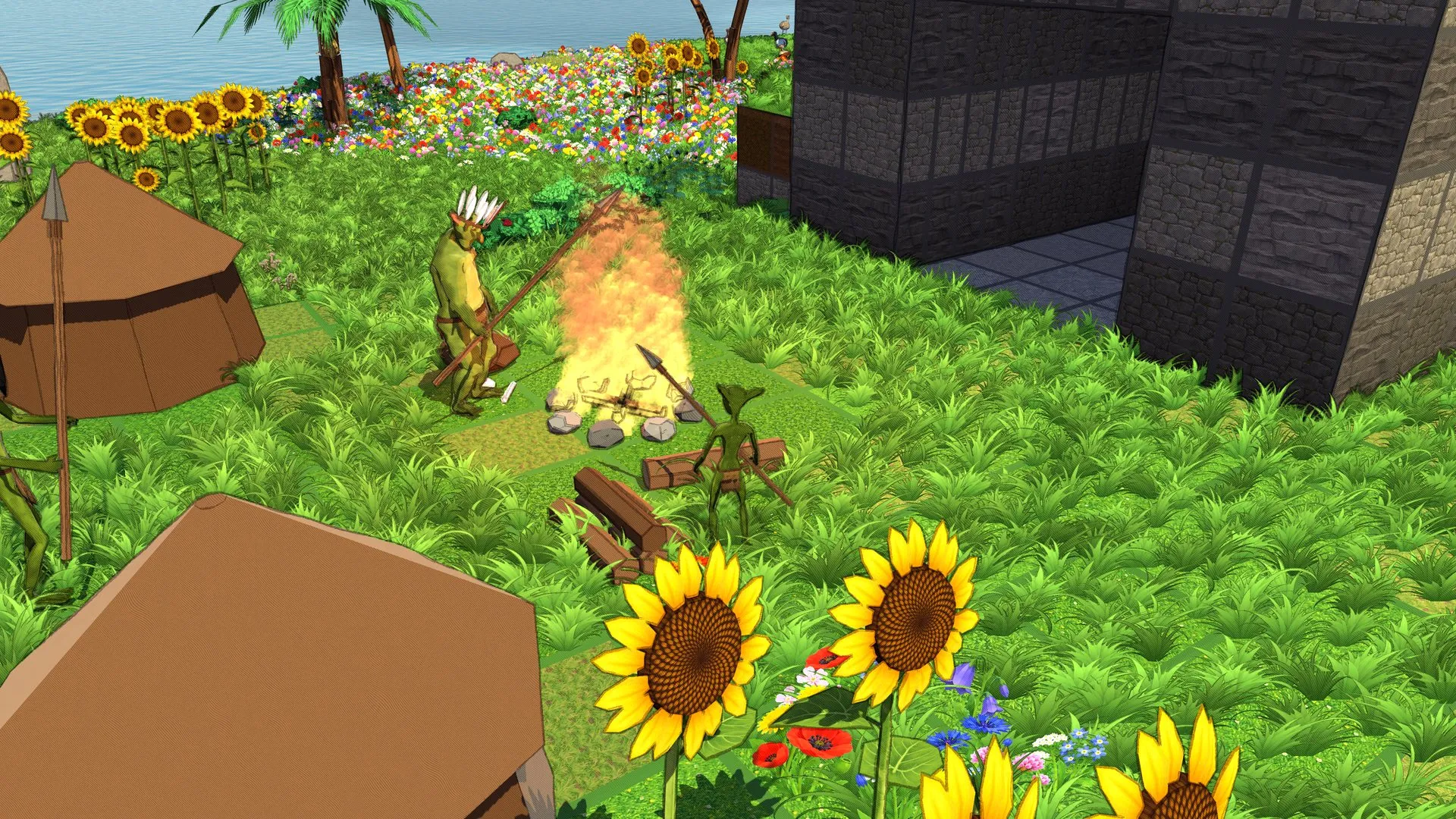
A new island may have a high mountain (the new game’s “High mountains”: none, one, more). A tall rock with a snowy peak nobody can climb, ledges with trees on them. And at its foot, before the mouth of a small cave, burns the fire of a goblin camp.
The goblins are there from day one, and their day is better organised than many a colony’s. In the morning they set out in twos and threes to fell a tree or hunt game, the same game the wolves hunt, so they eat out of each other’s larder. Wood becomes huts, food becomes more goblins, as long as there is room to live. In the evening they sit by the fire and dance. At night they sleep round it so soundly you can tiptoe right between them. Until somebody bumps into one.
They never attack the colony. They just hate visitors: whoever steps up to their fire gets jumped, and a crew out for wood goes for any raccoon it meets. At the back of the cave stands a chest, and while a single goblin of the village lives, it stays locked.
Every goblin his own
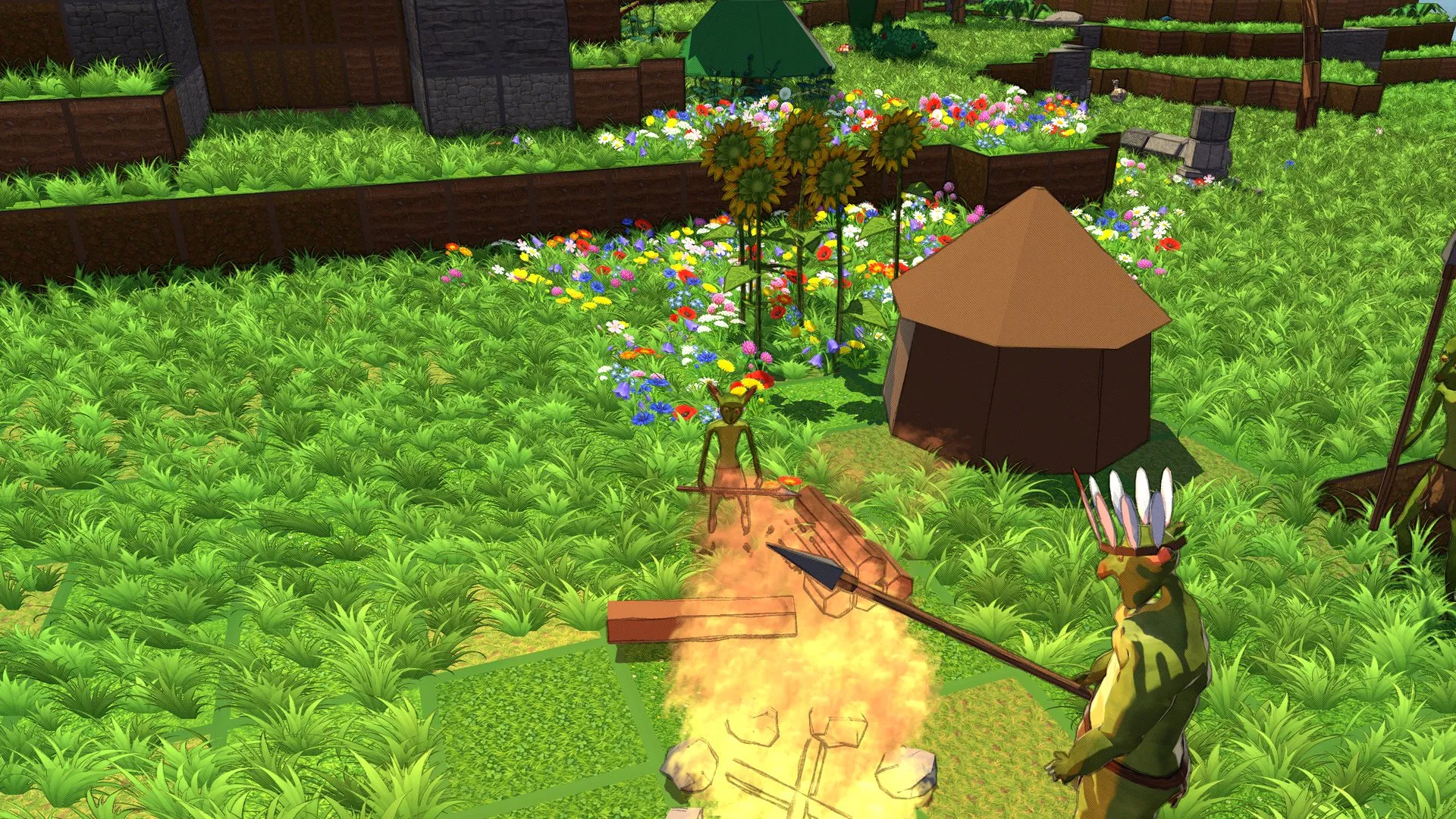
A goblin carries whatever fate gave him. Most have a club, some a spear that reaches further and thrusts and slashes by turns, and about one in four a bow. The archer shoots from afar and backs off from anyone who gets close; only cornered does he club you with the bow. Luckily a raccoon can leap aside from an arrow.
The more huts a village has, the more goblins go about in furs, which take a third off every blow. And one in each village wears a feather crown: the chief. He is tougher, and while he lives his goblins never retreat. When he falls, the rest run to the fire for a while and the next one puts the crown on.
What they leave behind: a stick, a working bow from the archer, a hide from the furs and from the chief a feather crown, “taken from a fallen goblin chief. Whoever wears it shows it off.” Raccoons love showing off. A village wiped out gets nobody new: the fire dies down, the huts are left as ruins, the stocks spill onto the ground and the chest unlocks.
The expedition
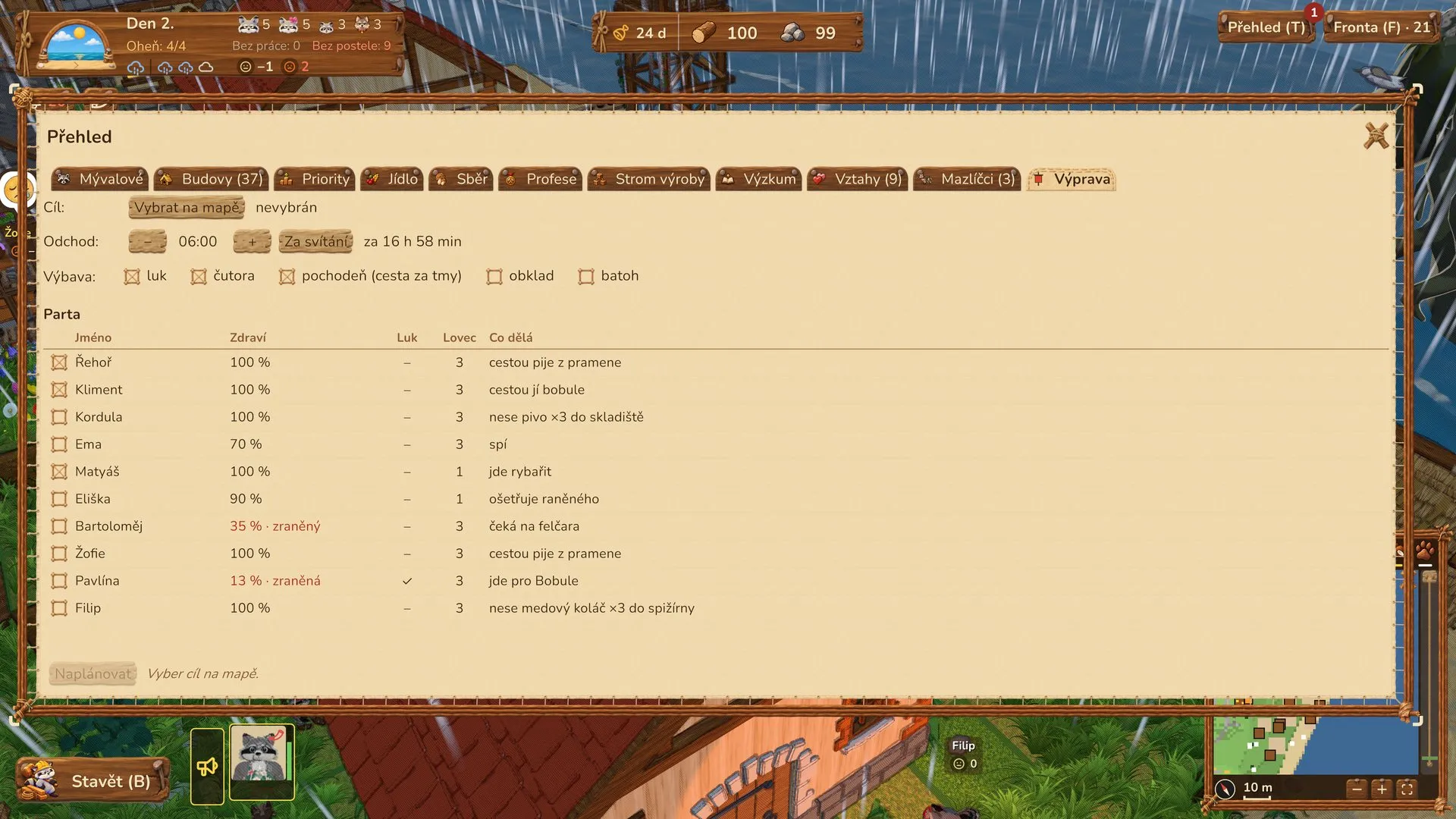
The Overview has a new tab, Expedition (key E). Pick a target on the map, in the fog if you like, the hour to leave (or simply “At dawn”), the gear for the whole party (bow, flask, torch, poultice, backpack) and at least two raccoons. The game offers the three best suited itself.
Then the colony gets them ready: sends them to bed in time, feeds them, waters them, they fetch their gear, light their torches and gather at the rally at home. The table says for each whether he “will make it” or “won’t make it” and why. Short of a bow, the Make button orders one at the workshop. The colony makes nothing by itself: it is an expedition, not a miracle.
At the hour they set off together: the leader in front, the others two by two behind him, and nobody walks on while someone lags. Out there nobody is alone. At the target they look around, and home again they say what they saw: dens, ruins, chests. Hunger, thirst, fear of the dark or exhaustion turn them home too, and out loud: “The expedition is turning back: Pepík is hungry.” Heroism has its limits, and one of them is lunch.
When it hurts
Out there, fights go by their own rules. The badly wounded fall back behind the line. When half the party is down, the whole party retreats: someone grabs whoever lies knocked out and drags him, the rest guard the rear. A message comes with a Fight on button, in case retreat strikes you as cowardice.
After the fight come the poultices: they bring round whoever lies out cold and tend the wounded. Then the game asks: Go on, or Go home? Say nothing, and after a while the expedition heads home by itself.
Whom to visit
A target need not be just a patch of map. Point the target tool at the tomb, a wolves’ den, a bear’s den or a goblin camp and the expedition goes to attack. At the target it kills the grown-ups and waits for those not at home (a goblin out for wood, a wolf on the hunt). The page reports “Attacking: 3 of 4 left” and in the end something like “Goblin camp cleared.” At the tomb that holds till the next midnight, when the guards get up again, and breaking it down is still the colony’s job.
On the target stands the standard: a tall pole with a raccoon flag that flies in the wind and shows through the fog and on the minimap. Nobody carries it or plants it; it simply stands where you pointed. On an expedition, paws are needed for bows and flasks.
The barracks
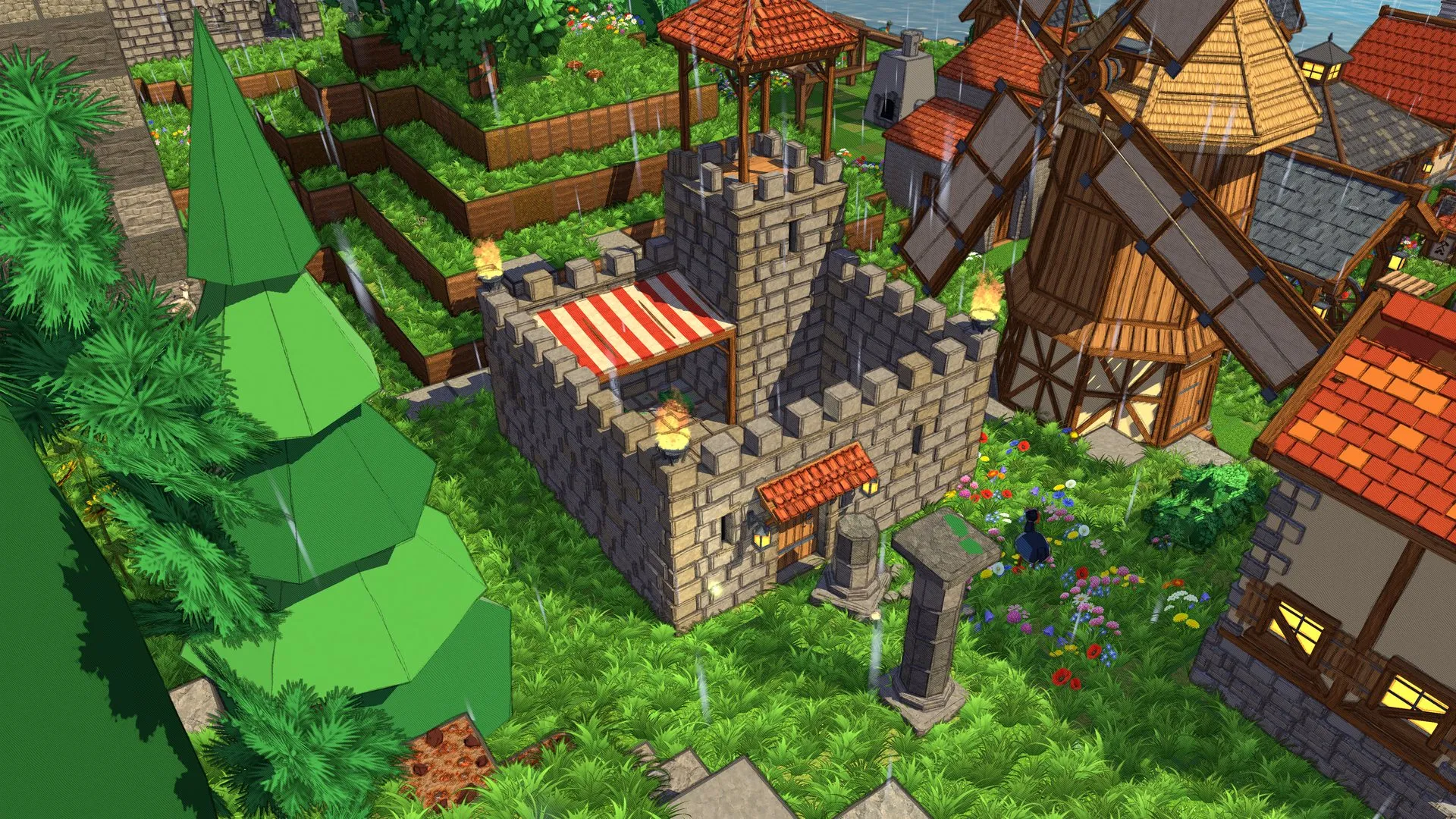
An expedition wants a warrior. The barracks are a small fort with a yard, a tower and three beds under a canopy for three employees. Training dummies go up round them, and the warriors train at them for as many hours a day as you set in the barracks’ window. A dummy only takes a warrior as far as Journeyman, though; past that only a real fight helps. A dummy, after all, never hits back.
A warrior’s level adds to his blows and his aim in a fight. The sword wants strength, and iron armour wants a strong, experienced warrior. When the strength fades, the raccoon takes the piece off and says so: “Pepík put the sword away: not strong enough.” And when someone attacks the colony, the warriors from the barracks are the first to run and help.
Odds and ends
- The forest grows back. A tree the goblins fell grows back like any wild one, and the clearing round the camp greens over again in time.
- A young goblin carries only a stick and shows his gear once he grows up.
- Packed lunch. On an expedition the raccoons eat and drink what they carry in their pouches and flasks.
- Left behind. If someone falls behind on the way, the party turns home for him. Nobody is left out there alone, as far as it can be helped.
- Stayed at home. Whoever is not at the rally at the hour is named with his reason, and the expedition sets off without him.
Coming up
The goblins now know the raccoons go visiting. The raccoons now know the goblins hate visits. We shall see who learns first.