For a long time the biggest predator on the island was the raccoon. The capybaras knew it and did not lose much sleep over it. That has changed.
Hunting as a job
A click on an animal no longer sends everyone. It puts a job in the queue, “Hunt the capybara”, and everybody else keeps working. Who may hunt is the Hunter column in the priorities. Shift+click is the alarm: everyone at it.
The hunters’ hut has two hunters with bows. They take clicked hunts first, and when meat runs low they hunt on their own in their hunting ground. You place the ground on the map, say how much meat to keep, and how many of each kind to leave alive.
Because the game now breeds, but only as far as the island can feed it. Full herds split up, birds and crabs come back from outside. Capybaras hunted out, though, never come back, and the game tells you before it is too late: “Capybaras: only the last two adults are left on the island.”
Wolves and a bear
The island has dens. Wolves guard the territory round theirs, go for any raccoon they see in it, and howl at night at their set hours, two in the morning included. A hungry pack hunts game, and with none about it goes for a pen: the leader jumps the fence, takes a hen and jumps back out with it. Outside their territory, the wolves pick raccoons who are alone or hurt. Going into the woods on your own has stopped being sensible.
The bear is a loner and sleeps half the day. The other half he thinks about honey. He raids wild nests and the colony’s hives alike, and the bees cannot touch him. “A bear is heading for the hives.” gives the colony a little time, because the bear walks to honey at a stroll. He knows it is not going anywhere.
The raccoons now keep their eyes open. When they see an enemy going after a friend, the weak run to the others or to the fire and a strong group stands its ground. And you get “The wolf is on Pepík’s heels!” straight away, not after the first bite.
The monster
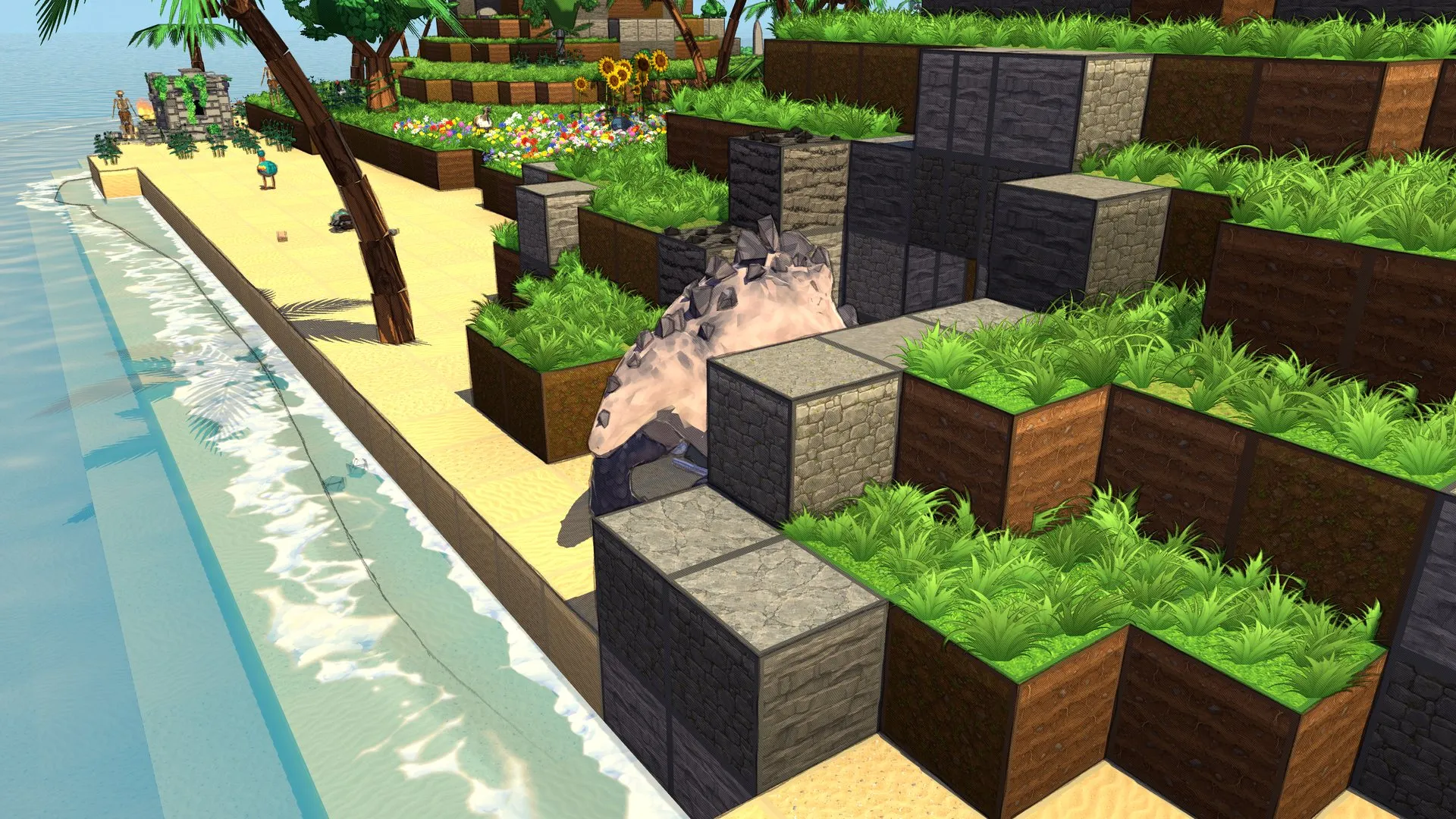
Somewhere at the mouth of a cave sleeps the monster, nearly three metres of stony back. It does not share its ground. An intruder gets sniffed at first, then it rears up, comes closer, beats its chest and roars. Unarmed raccoons take the hint and run. Whoever stays gets punched, knocked flat by a blow to the ground, grabbed by the ankle and thrown, or has a rock hurled at him from afar. When it charges and runs into a tree, it kneels stunned for a moment, shaking its head. That is the moment.
You can see it is hurt: stones fall off its back. Below half its health it flies into a rage, and if you give up the fight it heals within a day. You do not take a stick to the monster, you take a prepared colony. The reward? A stone idol with glowing eyes that the monster was lying on, and the monster’s bolete that grows in its territory: whoever eats one gets a point more in a random skill, for good.
Steal yourself a dog
Click a wolf cub at a den you have found and a raccoon sets off to get it. He sneaks up, and if the pack is home he backs off (“The pack is at its den; Pepík backed off.”). If not, he picks the cub up in his arms and carries it home to the fire. A pack that sees him goes after him and lets go only at the fire. Carrying a stolen cub home is exactly as relaxing a stroll as it sounds.
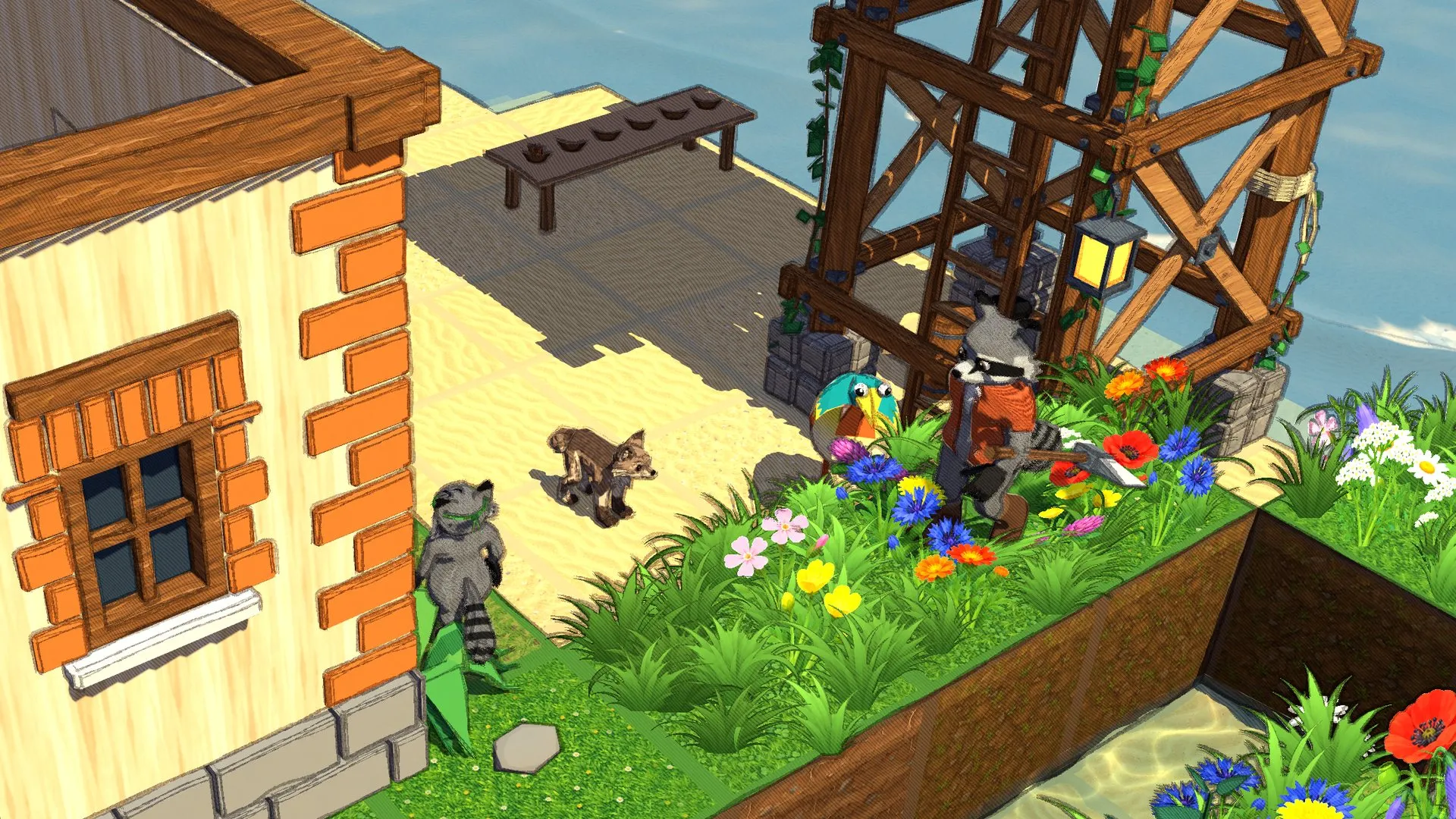
The cub follows its raccoon, he feeds it meat, and in a few days it is a dog. A dog has a name (Rover, Rex, Spot…), can be renamed, and has its own Pets tab in the colony overview. With a harness and travois from the smithy, it carries a second load beside its master: logs dragged behind, small things in saddlebags. It growls when a wolf comes near, helps in a fight, and a raccoon with a dog does not count as alone to a pack. When its master dies, the dog lies by his grave for a day.
The flytrap
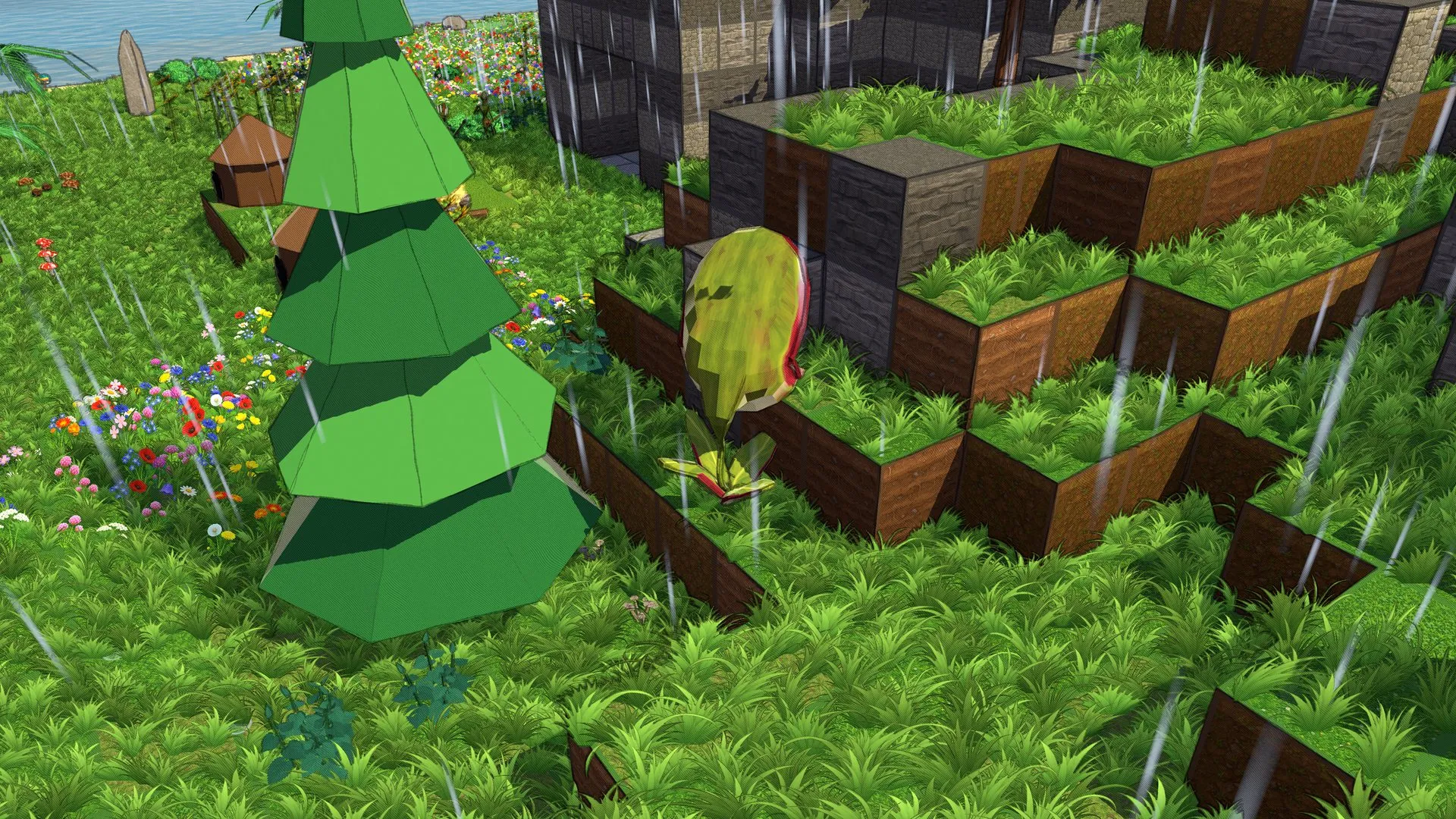
In the damp and the shade lurks a plant. A raccoon who walks past gets swallowed, digested for a while, then spat out. The others free him by cutting it down. One raccoon on his own never manages it, because it eats him first. Two can: one gets digested, the other chops.
A raccoon carries being swallowed with him for two more days, and does not like walking past a flytrap afterwards. Those who saw it are shaken, a friend most of all. The rescuer and the rescued are glad and grow fonder of each other. Nothing brings two raccoons together like a shared experience of digestion.
The wild hog
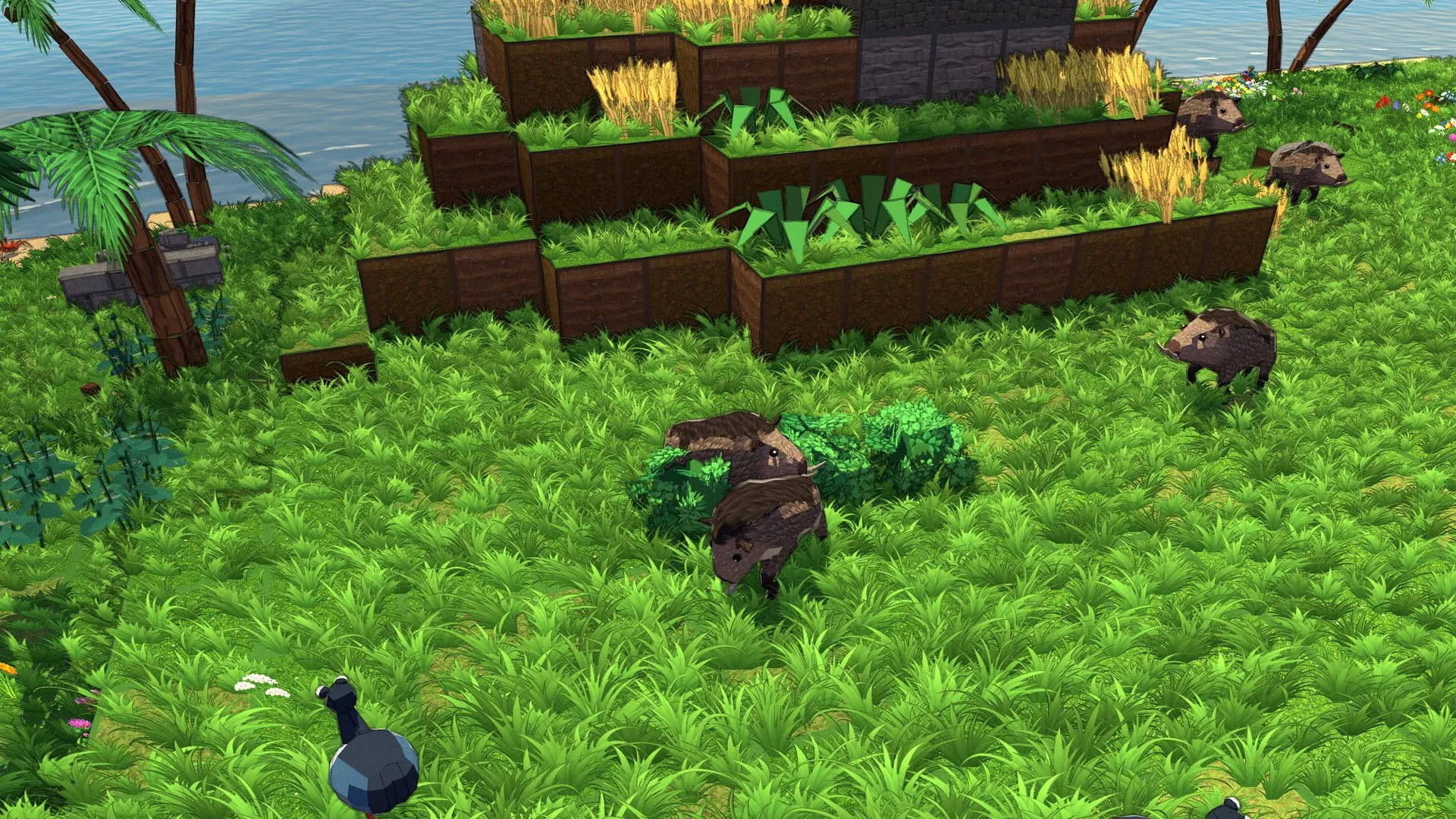
The wild hog lives in a herd like a capybara, but does not run. A hunted one turns and charges the hunter with its tusks, and a sow charges anyone who comes near her piglet. Hunting one is risky, but it brings more meat, a hide and tusks. Tusks and a liana string into a necklace: whoever wears it takes to his heels later still. A herd stands up to wolves too, and a pack it has routed keeps out of its way afterwards.
Bees
Wild nests hang in the trees, and whoever walks too close gets stung. A sting costs no health, only temper. A nest can be torn down, and the stung raccoon gets honey and wax for his trouble. Or think up beekeeping in the study: a beekeeper in a veil moves a wild nest into a hive, the hive makes honey from whatever is in bloom around it, and it pollinates the fields and bushes. Best build the hives far from the bear.
Hens and pens
A wild hen will no longer just be led away. The herder chases her, she runs, ducks down, he makes a grab. If he is nimble he catches her and carries her to the pen in his arms while she flaps her wings. If not, she gets away and the chase goes on.
A pen with a well-fed pair bears young at night for as long as there is room. Every pen has its number and, for each kind, its own count of how many to keep there and how many to slaughter.
Odds and ends
- Wild hens lay their eggs on the ground. Finders keepers.
- A howl blips on the minimap as a ring where the pack is right now, even in the fog.
- A dog’s grave reads “a faithful dog”, with its master’s name.
Coming up
The capybaras are hoping the next news will be about something else.