For a long time the raccoons lived on whatever they happened to find. Now they have a mill, a bakery, a brewery and a menu. And with the menu came the first complaints about the cooking.
From ear to loaf
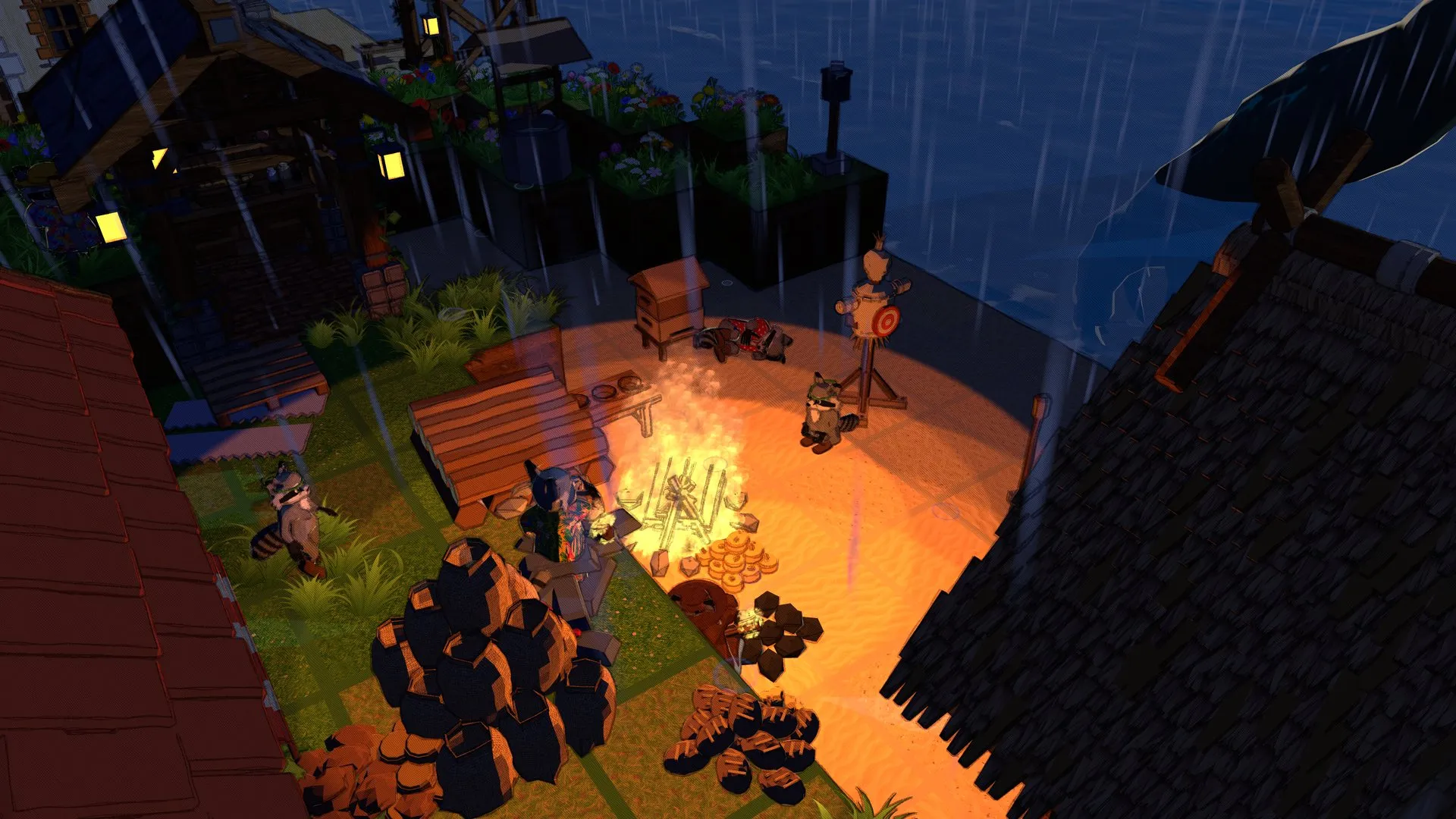
The mill grinds ears of grain into flour, and its sails turn for as long as the miller is grinding. You can tell from across the island whether work is being done, or whether the miller is off having a snack again.
The baker lights the oven only when there is something to bake. He brings flour and water, kneads the dough inside the bakery, carries it out to the oven and stands guard over it the whole time it bakes. Then he takes out the loaves. The door swings open in front of him and shuts behind him: the bakery is not heating the whole island. With flour and honey he bakes honey cake too. When the orders run out, the oven burns down and goes cold.
Grain has a house of its own, a granary on stone feet, and no longer takes up room in the storehouses.
What may be eaten
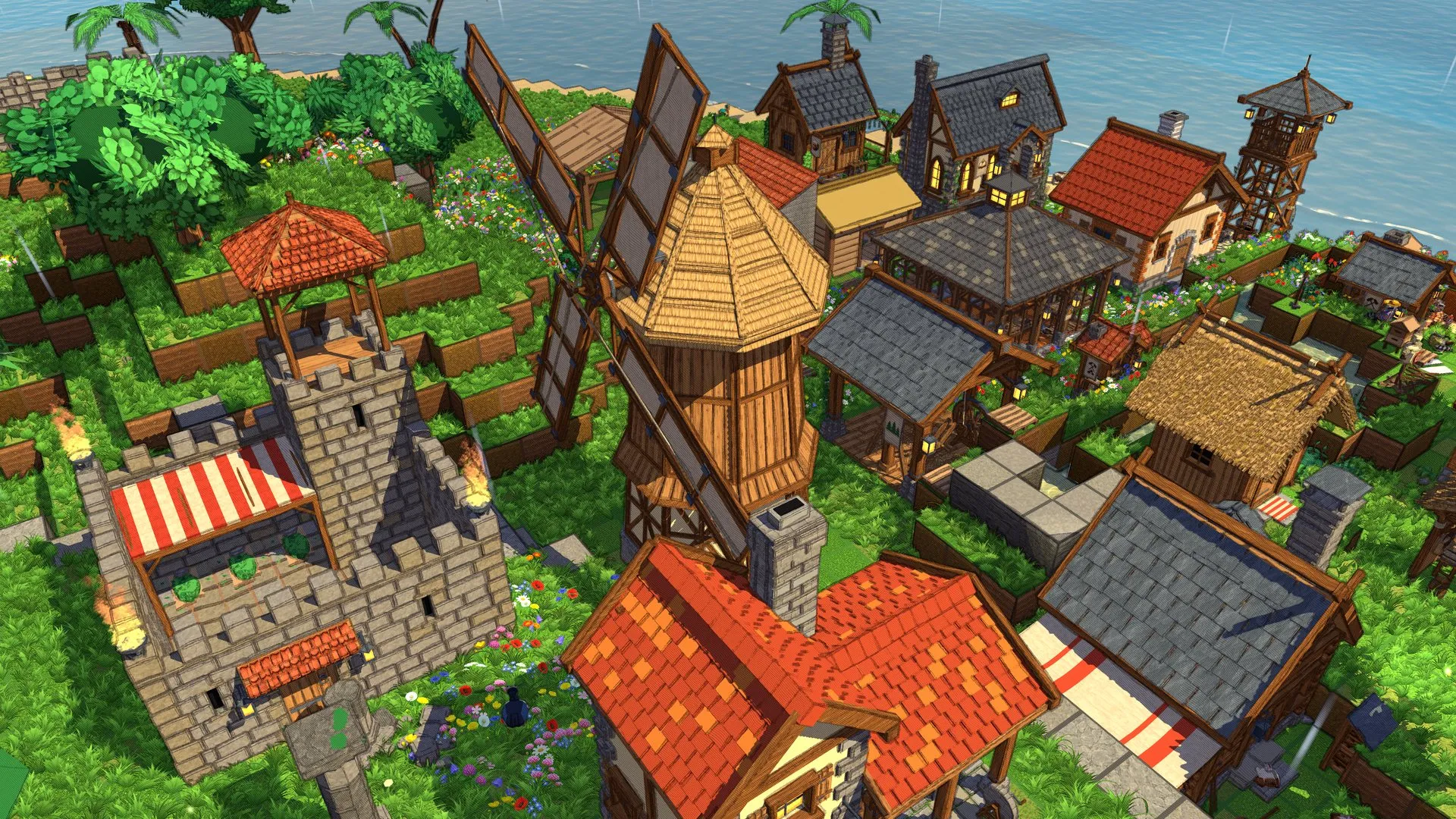
Not everything in the larder is meant to be eaten. The honey is for the cake, the raw eggs are for the pan. So on the colony’s menu you set each food to Always, In need or Never. An “in need” food is touched only by a very hungry raccoon with nothing better about, and only until he is no longer very hungry. “Never” means never, not even when ordered. The cook, the baker and the brewer still take what they need: the menu is for eating, not for cooking.
Fish again…
Raccoons want variety. Every food belongs to a group (fruit, fish, meat, eggs, bread and cake, sweets, mushrooms), and a raccoon remembers what he has eaten over the last two days. A varied diet cheers him up, a monotonous one gets him down, and three of the same in a row and he is sick of it. So from whatever is to hand he picks what he has not had for a while. When there is nothing else, he eats what there is and scowls, with a fish in his speech bubble. He will never go hungry over it. He will just make sure you know.
Some mornings he wakes up craving something the colony has had before. Satisfy the craving and he shows you a heart. A Picky raccoon tires of a food sooner, a Frugal one does not care, and a Glutton gets cravings twice as often.
The fish on the menu come from the new fishers’ hut. The fisher takes his rod to the sea or a pond within its reach, casts and waits. When he gets a bite, the fish leaps out of the water and flies along the line straight into his paws. A pond can be fished out (and exactly as many fish swim in it as are left), the sea never runs dry, it only bites slower. The raccoons eat raw fish only in need; the cook roasts it on the hearth.
Mushroom roulette
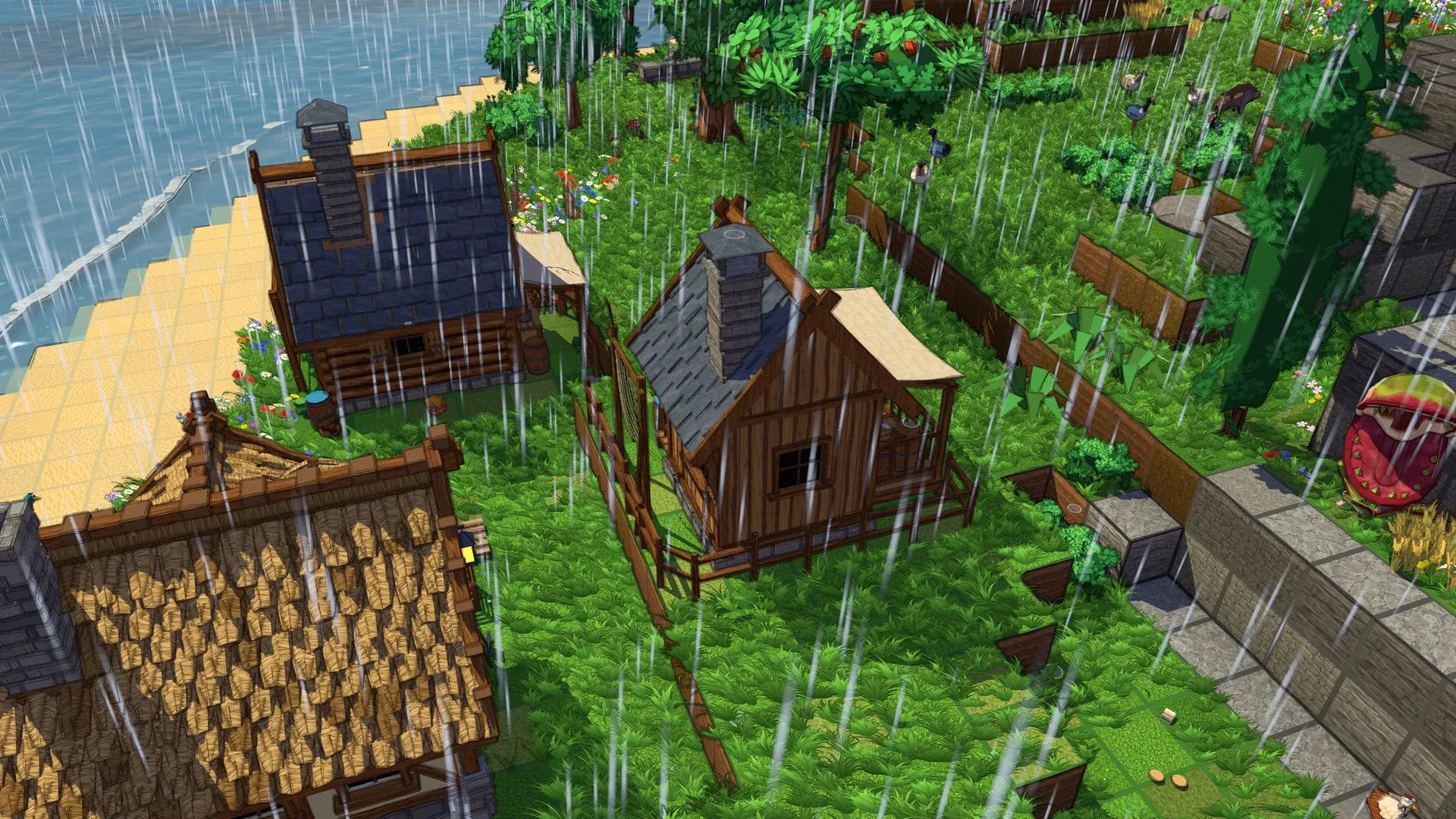
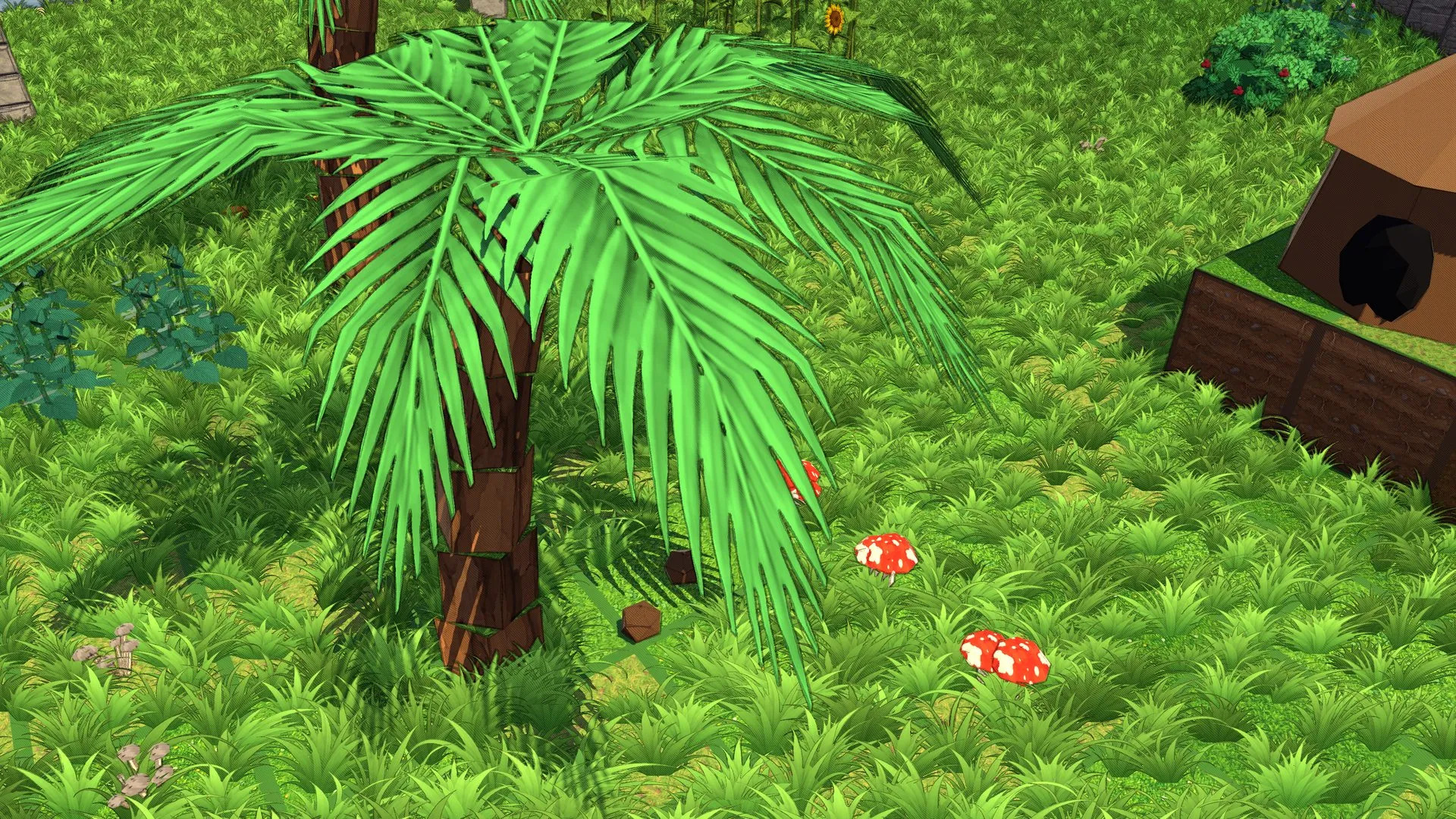
After rain, mushrooms come up: the red spotted cap, the brown bolete, the slender white cap, the yellow chanterelle, the violet mushroom and the grey tuft. A click picks them, and those left alone rot within a few days.
What each one does is drawn anew every game. Three are good: they give strength, speed, sharp wits, good cheer or a full belly, keep tiredness away, or give Hippo hide, which neither a sting nor a nettle gets through. The rest are bad, and one to three of them are deadly. There are two ways to find out which is which. The safe way: a thinker analyses it in the study. The quick way: in a raccoon’s window, click Taste a mushroom… He roasts it by the fire, eats it, and for an hour nothing happens at all. It is the longest hour in the colony.
Then everyone knows. Nobody picks a poisonous kind again, and a good one goes on the menu: the raccoons roast one as a side dish after their meals.
Hops, beer and the morning after
The first hop seedlings lie in a chest somewhere far from the landing. On the farm, hops are planted against a pole made of a stick, picked by hand and ripen again and again, now and then dropping a new seedling too. A beer found in a chest, or the hops alone, gives the raccoons the idea of brewing, and from then on the brewer brews beer of grain, hops and water.
Beer has its own row on the menu and starts at Never, so the colony does not drink the first chest dry before you have even noticed it. Set it to Always and a raccoon has one by the fire in the evening. An unhappy one has two, a miserable one three, and a Drinker one more on top. After the second he is tipsy: he works slower, talks more and is quicker to dance. After the third he hiccups and sways. After the fourth he falls asleep where he stands, and the raccoons’ table says “sleeping it off”. In the morning, the hangover. A Teetotaller never drinks, and the others like chatting with him all the more for it.
Click on a tipsy raccoon and he answers with a hiccup. Or a burp. It depends how the evening is going.
Fields that look after themselves
The farm and the lodge can now pick their own blocks: turn on Auto-sow (Auto-plant at the lodge), set how many they may take, and there is nothing to paint. Where the fields should go you mark with a zone, a rectangle in the farm’s window, or the Field tool on the toolbar, which draws fields anywhere on the island and shares them out among the farms itself. Where no farm can reach, the rectangle turns red.
The farmer clears his fields himself before he sows: he cuts back whatever grew there and carries off whatever somebody left lying about. And he waters. Without rain or a bucket of water the grain dries out, turns grey and stops growing.
Odds and ends
- Sunflowers. Patches of wild sunflowers, taller than a raccoon, grow in the meadows. They turn to follow the sun, hang their heads at night and in the rain, and part when somebody walks through. They do nothing else. Being pretty is their whole job.
- Nettles. They grow in damp and shady places and round the tomb. Whoever wades in itches for a while, slows down and gets cross. Cut, they leave Nettles, which the workshop twists into rope once the study has thought up nettle fibre.
- Lianas. They hang from broadleaf trees and are cut down with an axe. The tree stays standing and the liana grows back in time. Two lianas make a rope, and a rope and two sticks make a bow.
- Raw meat may now be eaten at last. In need.
Coming up
The colony has plenty to eat. Unfortunately, the bear has noticed. Next time: animals, hunting, and the question of who exactly is hunting whom.